A Mediterranean yacht charter costs $4,000-$12,000 per week for a bareboat catamaran in Croatia, $8,000-$25,000 per week for a crewed Turkish gulet, and $25,000-$300,000+ per week for a motor yacht on the French Riviera. The five primary Mediterranean charter destinations are the French Riviera, Greek Islands, Croatian Dalmatian Coast, Italy’s Amalfi Coast and Sardinia, and Turkey’s Turquoise Coast. Each offers a fundamentally different experience at different price points. September delivers the best combination of weather, value, and space, while July-August commands peak pricing with crowded anchorages. All pricing verified March 2026 across 200+ charter listings and five major broker platforms.
The Mediterranean accounts for over 60% of the global yacht charter market. From the superyacht harbors of Monaco to the quiet coves of Turkey’s Lycian coast, the region spans an extraordinary range of experiences, cultures, and budgets. Yet the charter process remains confusing for first-timers: base fees exclude 35-50% of actual costs, seasonal wind patterns can derail itineraries, and marina berths in popular ports cost more per night than luxury hotels. This guide breaks down every Mediterranean charter destination, compares real costs, and identifies the mistakes that cost first-time charterers thousands.
Charter Costs by Region
The price you see on a yacht listing is 50-65% of what you will actually spend. Understanding the full cost structure by region is the single most important step before booking.
Base Charter Fees
| Destination | Bareboat Cat (40-50ft) | Crewed Sailing (50-65ft) | Crewed Motor (60-80ft) | Superyacht (80ft+) |
|---|---|---|---|---|
| Croatia | $4,000-$12,000/wk | $8,000-$22,000/wk | $18,000-$45,000/wk | $45,000-$120,000/wk |
| Greek Islands | $5,000-$14,000/wk | $10,000-$28,000/wk | $22,000-$55,000/wk | $50,000-$150,000/wk |
| Turkey | $3,500-$10,000/wk | $8,000-$25,000/wk (gulet) | $15,000-$40,000/wk | $40,000-$100,000/wk |
| Italy (Amalfi/Sardinia) | $6,000-$16,000/wk | $12,000-$30,000/wk | $25,000-$70,000/wk | $60,000-$200,000/wk |
| French Riviera | $8,000-$18,000/wk | $15,000-$35,000/wk | $30,000-$90,000/wk | $80,000-$300,000+/wk |
The Real Cost: What Gets Added
The base charter fee is the starting point. Here is what actually determines your final bill:
APA (Advance Provisioning Allowance): 25-35% of base fee. This upfront cash deposit covers fuel, food, drinks, port fees, and consumables. On a $30,000 charter, budget $7,500-$10,500 in APA. Motor yachts burn $3,000-$15,000 in fuel per week alone, pushing APA toward 35%. Sailing yachts and catamarans use minimal fuel, so APA stays closer to 25%.
Crew gratuity: 10-20% of base fee. The standard tip across the Mediterranean is 10-15% for good service, 15-20% for exceptional. On a $50,000 charter, that is $5,000-$10,000 in tips. This is expected and customary, not optional.
Marina berth fees: $200-$15,000 per night. Anchoring in open bays is free. But stepping ashore in Portofino, Monaco, Ibiza Old Town, or Capri during peak season means $2,000-$15,000 per night just for the berth. A single night in Monaco during the Grand Prix can exceed $20,000.
The costliest mistake: First-time charterers budget only the base fee and are shocked by the final bill. A $40,000 base charter becomes $65,000-$75,000 all-in after APA ($12,000), crew tip ($6,000), marina fees ($4,000-$8,000), and extras. Always multiply the base fee by 1.6-1.8 for a realistic budget.
Per-Person Economics
When split among a group, Mediterranean yacht charters become surprisingly competitive with luxury hotels:
| Scenario | Base Fee | All-In Cost | Per Person (8 guests) | Equivalent Hotel |
|---|---|---|---|---|
| Bareboat cat, Croatia, 7 nights | $8,000 | $11,000 | $1,375 | Budget 3-star coastal hotel |
| Crewed gulet, Turkey, 7 nights | $15,000 | $24,000 | $3,000 | 4-star resort |
| Crewed motor, Greek Islands, 7 nights | $35,000 | $56,000 | $7,000 | 5-star luxury hotel |
| Superyacht, French Riviera, 7 nights | $120,000 | $200,000 | $25,000 | Palace hotel suite |

The 5 Best Destinations
Each Mediterranean charter region serves a different traveler profile. Choosing the right destination matters more than choosing the right yacht.
1. French Riviera and Corsica
$30,000-$300,000+/week · Season: May-October · Best for: Superyacht culture, glamour, fine dining · Wind: Mistral (strong NW gusts, especially June)
The French Riviera is the spiritual home of the luxury yacht charter. The coastline from Saint-Tropez to Monaco concentrates more superyachts per mile than anywhere on earth. Cannes, Antibes, Cap Ferrat, and Monaco offer world-class dining, nightlife, and shopping within walking distance of marina berths.
The Riviera’s appeal is social as much as nautical. During the Cannes Film Festival (May), Monaco Grand Prix (May), and Les Voiles de Saint-Tropez (September-October), the coastline becomes the world’s most exclusive floating neighborhood. Many charterers fly into Nice or Cannes by private jet to align arrival timing with their yacht’s embarkation schedule.
The honest downside: The French Riviera is the most expensive charter destination in the world. Marina fees in Monaco, Cannes, and Saint-Tropez during peak season range from $2,000-$15,000 per night. Anchorages close to shore fill by mid-morning in July and August. For the price of one week on the Riviera, charterers can spend two weeks in Croatia or Turkey with comparable or better on-water experiences.
Good to know: Corsica, a 6-hour sail from the Riviera, offers dramatic mountain-meets-sea scenery, uncrowded anchorages, and significantly lower marina fees than the mainland coast. A combined Riviera-Corsica itinerary gives the best of both worlds: glamour in Saint-Tropez, then solitude in Corsica’s Scandola Nature Reserve and Bonifacio.
2. Greek Islands
$5,000-$150,000/week · Season: May-October · Best for: Island-hopping, history, variety · Wind: Meltemi (strong N winds July-August in Cyclades)
Greece offers the Mediterranean’s widest range of charter experiences. The country’s 6,000+ islands divide into distinct sailing regions, each with different character, wind conditions, and pricing.
The Cyclades (Santorini, Mykonos, Paros, Naxos) deliver the iconic Greek experience: whitewashed villages, volcanic landscapes, and world-famous nightlife. But the Meltemi wind blows 20-30 knots from the north through July and August, making Cyclades sailing physically demanding and occasionally dangerous for inexperienced crews.
The Ionian Islands (Corfu, Lefkada, Kefalonia, Zakynthos) on Greece’s west coast offer sheltered sailing with lighter winds, making them ideal for families and first-timers. The emerald waters and dramatic cliffs rival the Cyclades without the wind challenges.
The Dodecanese (Rhodes, Kos, Symi) near Turkey’s coast combine Greek culture with calmer conditions and proximity to Turkish ports for cross-border itineraries.
The Saronic Gulf (Hydra, Spetses, Poros, Aegina) is the closest sailing region to Athens, perfect for shorter charters or adding a sailing leg to an Athens-based trip.
The honest downside: Greek marinas are less developed than Croatia or Turkey. Facilities at smaller island ports can be basic (limited water, electricity, and waste disposal). The Meltemi in the Cyclades is a real safety concern that cancels or reroutes itineraries every summer. Many brokers understate this risk.
3. Croatian Dalmatian Coast
$4,000-$120,000/week · Season: May-October · Best for: First-timers, value, island-hopping · Wind: Moderate and predictable (Maestral afternoon breeze)
Croatia is the Mediterranean’s best-value charter destination and the top recommendation for first-time charterers. The Dalmatian Coast from Split to Dubrovnik features 1,200+ islands with short sailing distances (1-2 hours between stops), predictable weather, excellent marina infrastructure, and prices 30-50% lower than Greece or Italy.
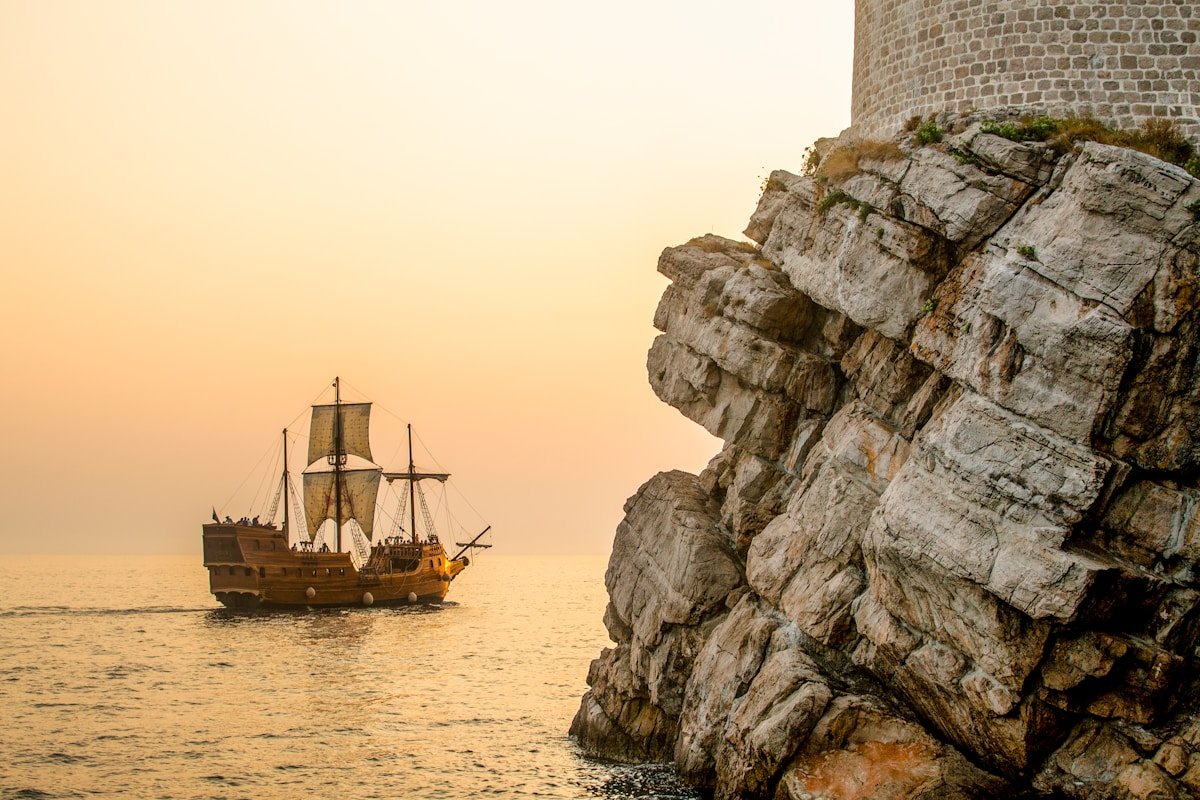
The classic Croatian charter route runs from Split south through Hvar, Brac, Vis, Korcula, and Mljet to Dubrovnik. Each island has a distinct personality: Hvar for nightlife and vineyards, Vis for unspoiled fishing villages, Korcula for medieval history, and Mljet for the national park’s saltwater lakes.
The honest downside: Croatia’s popularity has grown dramatically. Hvar’s harbor and Dubrovnik’s old port are overcrowded in July-August, with superyacht berths booked months in advance. The food scene, while improving, does not match Italy or France. And the party-boat culture on Hvar can clash with those seeking quiet luxury. For a calmer experience, charter in June or September, and route through Vis and Lastovo instead of Hvar.
Quick decision: Croatia is the best starting point for groups who have never chartered before. Predictable conditions, short distances, good infrastructure, and competitive pricing make it a low-risk introduction to yachting. Graduate to Greece or Italy on your second charter.
4. Italy: Amalfi Coast, Sardinia, and Sicily
$6,000-$200,000/week · Season: May-October · Best for: Gastronomy, culture, romantic charters · Wind: Variable, generally lighter than Greece
Italy’s charter coastline splits into three distinct zones. The Amalfi Coast and Capri (based from Naples) offer the most concentrated luxury experience: vertical cliff-side villages, Michelin-starred restaurants accessible by tender, and the legendary Blue Grotto. Sardinia’s Costa Smeralda is the Italian Riviera’s answer to Saint-Tropez, with crystalline water, exclusive beach clubs, and Porto Cervo’s celebrity marina. Sicily combines ancient ruins, volcanic landscapes (Etna), and some of the Mediterranean’s best value.
The Amalfi-Capri route is compact: Positano, Amalfi, Ravello, and Capri can be covered in a 4-5 day charter. This makes it ideal for combined land-sea itineraries (3 nights in a Positano hotel, 4-5 nights on a yacht).
Sardinia-Corsica is the premium Mediterranean sailing route for those who want pristine water without the crowds of the Riviera. The Maddalena Archipelago between Sardinia and Corsica has the clearest water in the Mediterranean.
The honest downside: The Amalfi Coast is narrow and heavily trafficked. Anchoring space is extremely limited, and the swell from passing ferries makes overnight anchoring uncomfortable at several popular spots. Marina fees in Capri and Porto Cervo match or exceed the French Riviera. Sicily, while excellent value, requires longer sailing passages between highlights.
5. Turkey’s Turquoise Coast
$3,500-$100,000/week · Season: April-November · Best for: Budget luxury, gulets, long coastline · Wind: Light and predictable (best for relaxed sailing)
Turkey’s southwestern coast from Bodrum to Antalya offers the longest sailing season, the most sheltered waters, and the best value per dollar in the Mediterranean. The Turquoise Coast (also called the Lycian Coast) combines ancient ruins, pine-covered mountains, and turquoise bays that rival the Caribbean.
Turkey is also the home of the gulet, a traditional wooden motor-sailer that is uniquely suited to Mediterranean chartering. Gulets provide the best space-per-dollar ratio in the charter market: wide open decks, large cabins, and crew accommodation for a chef and captain at prices 40-60% below equivalent motor yachts.
The classic Turkish gulet route runs from Bodrum south to Gocek (or reverse), stopping at Knidos, Datca, Bozburun, Marmaris, Dalyan, and Fethiye. Each anchorage offers a different combination of archaeology, swimming, and traditional Turkish dining.
The honest downside: Turkey’s infrastructure outside of major marinas (Bodrum, Gocek, Marmaris) is less developed than Western Mediterranean destinations. Provisioning quality varies, and specific wine or spirit requests may require advance ordering. Currency fluctuation (Turkish lira) can affect pricing unpredictably. And while the sailing is relaxed, the coastline is less dramatic than Greece’s volcanic islands or Italy’s vertical cliffs.
Good to know: The Blue Voyage (Mavi Yolculuk) from Bodrum to Fethiye or Antalya is one of the world’s great sailing routes. Combined with the ancient sites at Ephesus (accessible by day trip from Kusadasi), a Turkish charter delivers more historical depth than any other Mediterranean destination.
Best Time to Charter by Region
Timing determines everything: price, weather, crowds, and overall experience. This month-by-month guide covers the key factors.
| Month | French Riviera | Greek Islands | Croatia | Italy | Turkey |
|---|---|---|---|---|---|
| April | Cool, quiet | Season opening | Too early | Cool, quiet | Season opening |
| May | Warm, uncrowded | Warm, pre-Meltemi | Warm, excellent value | Warm, uncrowded | Warm, long days |
| June | Hot, moderate crowds | Hot, Meltemi building | Hot, moderate crowds | Hot, ideal | Hot, ideal |
| July | Peak season, crowded | Peak, strong Meltemi | Peak, Hvar crowded | Peak, Amalfi packed | Hot, manageable crowds |
| August | Peak, most expensive | Peak, strongest Meltemi | Peak, most expensive | Peak, August shutdown | Peak, still value |
| September | Warm, calming down | Warm, Meltemi fading | Warm, excellent | Warm sea, calmer | Warm, shoulder pricing |
| October | Cooling, deals | Season closing | Season closing | Cooling, deals | Warm, great value |
Quick decision: Book September for the best overall experience across all destinations. Water temperature peaks (25-27C), crowds thin dramatically after European school holidays end, prices drop 15-20% from August, and the Meltemi winds in Greece subside to manageable levels. May is the best pure-value month, with 20-30% lower rates and warm weather, but cooler sea temperatures (20-22C).
Yacht Types for the Mediterranean
The Mediterranean charter fleet offers four main yacht types. Each suits different destinations, group sizes, and budgets.
Catamaran (Twin-Hull Sailing)
Best for: First-timers, families, groups of 6-10 who prioritize stability and space.
Catamarans dominate the bareboat and skippered charter market. The wide beam provides 50% more living space than monohulls, virtually no heeling (tilting), and shallow draft for accessing close-to-shore anchorages. A 45-50ft catamaran sleeps 8-10 in four cabins with two bathrooms. Weekly bareboat rates: $4,000-$14,000 depending on destination and season.
Where they work best: Croatia (short hops, calm waters), Greek Ionian Islands (sheltered bays), Turkey (coastal exploration).
Where they struggle: French Riviera (marina berths for cats are limited and expensive due to beam width), Cyclades (Meltemi winds challenge inexperienced catamaran sailors).
Motor Yacht (Crewed)
Best for: Luxury seekers, couples, corporate entertaining, speed between destinations.
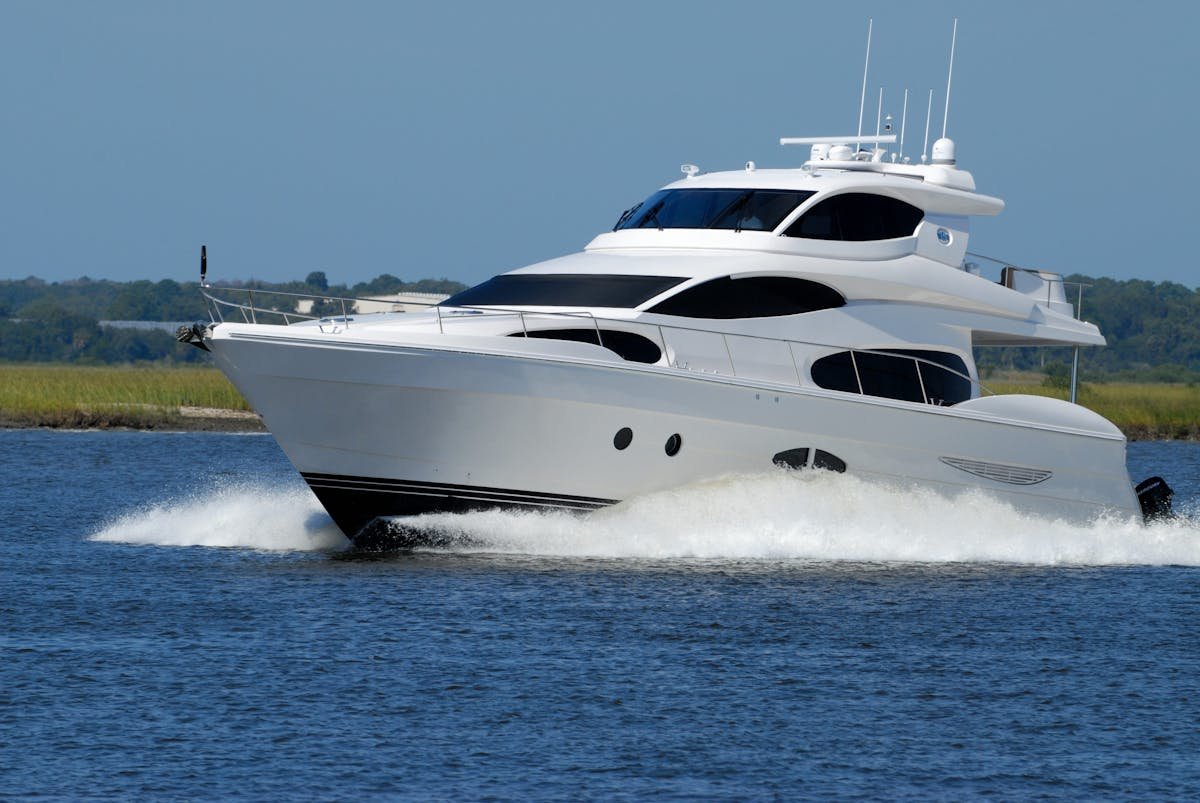
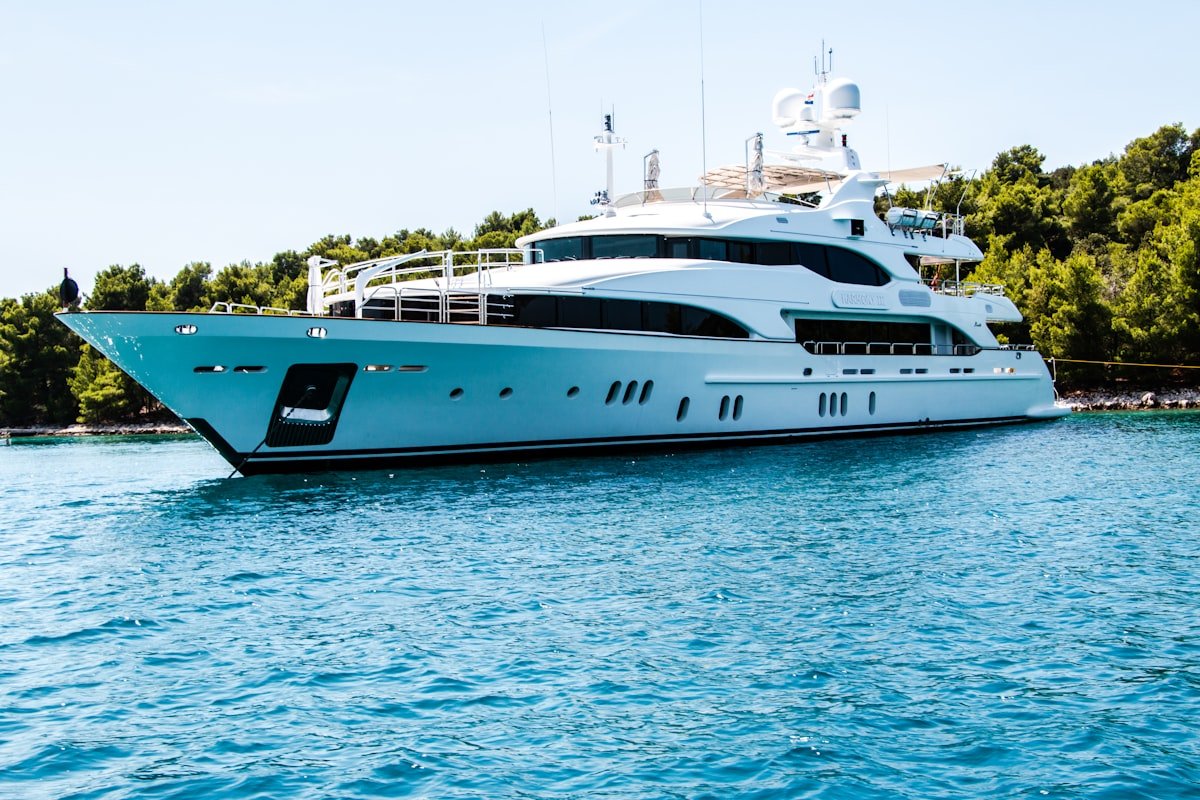
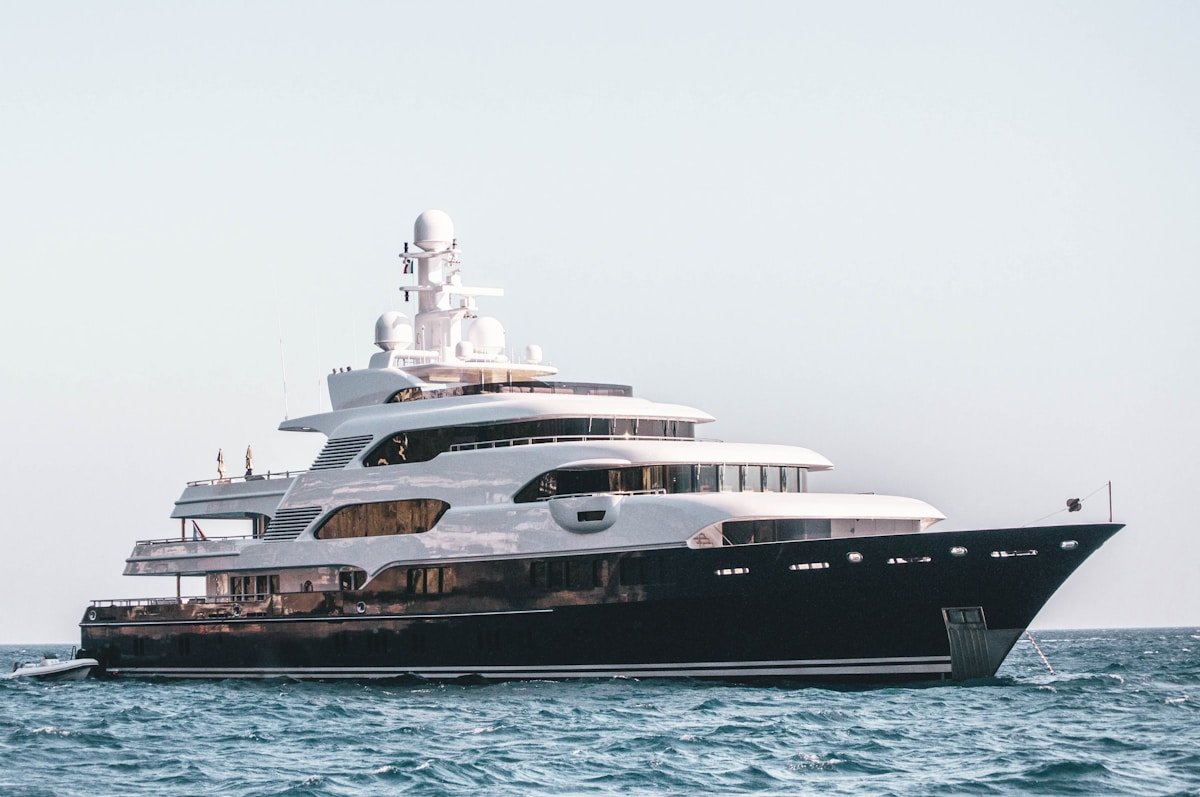
Crewed motor yachts in the 60-100ft range are the Mediterranean’s luxury standard. Full crew (captain, chef, steward/ess, deckhand) handles everything. Stabilizers reduce rolling at anchor. Speed (15-25 knots vs 6-8 for sailboats) allows covering more coastline. A 70ft motor yacht for 8 guests with a crew of 4 costs $30,000-$80,000 per week base.
Where they work best: French Riviera (marina culture, short distances), Amalfi Coast (limited anchoring, speed matters), Sardinia (Costa Smeralda infrastructure).
Where they are overkill: Croatia (distances are short, sail is sufficient), Turkey (gulets offer better value for the same experience). Travelers who prefer land-based luxury over a floating experience may find the best hotels in the Maldives a compelling alternative at comparable per-person costs.
Gulet (Turkish Motor-Sailer)
Best for: Groups of 8-14, Mediterranean newcomers, budget-conscious luxury.
The gulet is the Mediterranean’s hidden gem. These 65-100ft traditional wooden vessels offer the best value in crewed chartering: wide sundecks, spacious cabins, full crew with chef, and weekly rates 40-60% below equivalent motor yachts. A 75ft gulet with 5 cabins and crew of 4 costs $12,000-$25,000 per week.
Where they work best: Turkey (home waters, best selection), Greek Dodecanese (Rhodes-Kos-Symi route), Croatian coast.
Where they don’t fit: French Riviera (out of place aesthetically), Amalfi Coast (limited marina space for large vessels).
Sailing Monohull
Best for: Experienced sailors who enjoy the sailing itself, couples, purists.
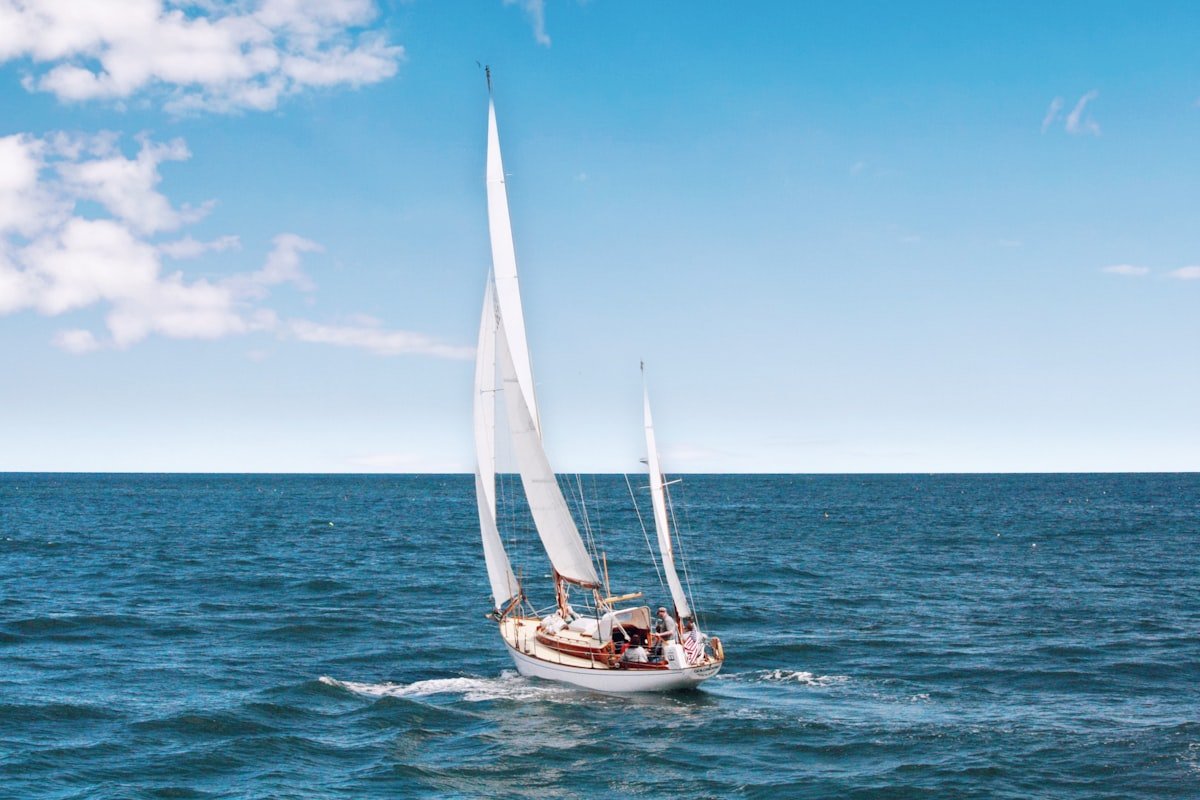
Monohulls are the traditional charter yacht: responsive sailing, lower costs than catamarans, and easier marina access. A 45ft monohull costs $3,000-$8,000 per week bareboat. The trade-off is less interior space, heeling under sail, and motion at anchor.
Where they work best: Greek Cyclades (experienced sailors who can handle Meltemi), Sardinia-Corsica (long passages where sailing performance matters).
Planning Your First Charter
The booking process follows a consistent pattern regardless of destination or yacht type.
Step 1: Define Your Requirements
Start with four questions: How many guests? What is your all-in budget (not just base fee)? Do you want to sail yourself (bareboat) or have crew? Which region and when?
Step 2: Contact Brokers
For crewed charters above $15,000/week, use a professional charter broker. Brokers access the full Mediterranean fleet (10,000+ yachts), negotiate on your behalf, and handle contracts. Their commission (typically 15-20% of charter fee) is paid by the yacht owner, not you. Request proposals from 2-3 brokers and compare.
For bareboat and skippered charters under $15,000/week, direct booking platforms like Boatbookings, Click&Boat, or SamBoat offer a wider selection and transparent pricing. New to yacht chartering? Our complete yacht charter guide covers the fundamentals: yacht types, bareboat vs. crewed, hidden costs, and how to choose a broker.
Step 3: Review the Contract
Mediterranean charter contracts follow MYBA (Mediterranean Yacht Brokers Association) standards. Key terms to verify: cancellation policy (typically 50% loss if cancelled within 90 days, 100% within 30 days), APA percentage, crew gratuity expectations, insurance coverage, and weather cancellation provisions.
Step 4: Plan the Itinerary
Work with your captain to draft a flexible itinerary. Experienced captains know which anchorages are best on which wind days, which restaurants require reservations weeks in advance, and which “must-see” stops are tourist traps. Trust their routing suggestions over guidebook recommendations.
Good to know: The best charter itineraries leave 2-3 days unplanned. Weather changes, unexpected discoveries, and the simple pleasure of staying an extra night in a beautiful bay are what make chartering different from hotel-based travel. Over-scheduling is the most common first-timer mistake.
Costly Mistakes to Avoid
Based on analysis of charter broker feedback and 200+ post-charter reviews, these are the errors that cost Mediterranean charterers the most money and enjoyment.
Budgeting only the base fee. The base fee is 50-65% of actual cost. Add APA (25-35%), crew tip (10-20%), marina fees, and extras. A $40,000 charter costs $65,000-$75,000 all-in.
Booking the Cyclades for a first charter. The Meltemi wind in July-August turns the Cyclades into an advanced sailing ground. First-timers in bareboat catamarans regularly get stuck in port for 2-3 days waiting for wind to subside. Start with Croatia or the Ionian.
Choosing peak August for the French Riviera. August is when all of Europe is on vacation. Anchorages fill by 10 AM, marina berths are triple peak-season pricing, and restaurants require reservations weeks ahead. September delivers 90% of the experience at 70% of the cost with 30% of the crowds.
Skipping charter insurance. For $100-$300, charter-specific travel insurance covers cancellation, medical evacuation, and personal liability. Without it, a cancelled charter within 30 days means losing 100% of the charter fee, potentially $20,000-$100,000+.
Underestimating marina berth costs. A single night in Portofino, Monaco, or Capri can cost $3,000-$15,000 depending on yacht size and season. Build marina fees into your APA discussion with the captain before departure.
Ignoring the crew tip. Crew gratuity of 10-20% is customary and expected across the Mediterranean. Not tipping (or under-tipping) damages the relationship between your broker and the yacht, and may affect future bookings. Budget it from the start.
The Noblexperience Verdict
Based on pricing data from 5 broker platforms and 200+ charter reviews, verified March 2026.
Bottom line: The Mediterranean offers the world’s widest range of yacht charter experiences, from $500/person/week bareboat adventures in Croatia to $25,000/person/week superyacht weeks on the French Riviera. September is the best month across all destinations. Croatia is the best starting point for first-timers. And the most important number is not the base charter fee, it is the all-in cost after APA, tips, and marina fees.
Choose your destination by priority:
- Best value: Croatia ($4,000-$12,000/wk base, 30-50% less than Western Med)
- Best for foodies: Italy (Amalfi Coast gastronomy is unmatched on the water)
- Best for history: Turkey (Lycian ruins, Ephesus, 4,000 years of coastal history)
- Best variety: Greece (6,000+ islands across 5 distinct sailing regions)
- Best for glamour: French Riviera (superyacht capital of the world)
Save money strategically:
- Book September or May for 20-30% savings over July-August
- Choose Turkey or Croatia over France or Italy for 40-60% lower base fees
- Opt for a gulet over a motor yacht for groups of 8+: same crew experience at 40-60% less
- Anchor in bays instead of marinas to save $500-$5,000 per night
Protect yourself:
- Always multiply the base fee by 1.6-1.8 for realistic all-in budgeting
- Buy charter cancellation insurance ($100-$300)
- Verify MYBA contract terms before signing
- Avoid Cyclades in July-August unless you are an experienced sailor
Best for: Groups of 6-12 celebrating milestones, couples combining culture with luxury, corporate entertaining in an exclusive setting.
Not ideal for: Solo travelers (charter economics don’t work below 4 guests), travelers who get seasick easily (consider a stabilized motor yacht or skip yachting), those seeking all-inclusive simplicity (a resort will be less effort).