Chartering a private jet costs $8,000-$150,000+ per flight depending on aircraft size and route, but the math changes dramatically with group size: for 6 or more travelers sharing a transcontinental flight, the per-person cost of a midsize jet often falls within 20-30% of a first-class ticket - while eliminating check-in lines, connection risks, and fixed departure times. Whether it’s worth it depends on three variables: group size, route length, and what you value beyond speed.
What Does Private Jet Charter Cost
Private jet charter pricing is driven by aircraft category, route distance, and seasonal demand. These are real-market hourly rate ranges based on operator quotes aggregated across North America, Europe, and the Middle East (verified March 2026):
| Aircraft Category | Hourly Rate | Passengers | Max Range | Typical Use |
|---|---|---|---|---|
| Turboprop | $2,000-$4,000 | 6-8 | 3-4 hours | Short regional hops |
| Light Jet | $2,600-$4,500 | 6-8 | 3-4 hours | Domestic routes under 1,500 nm |
| Midsize Jet | $4,000-$6,500 | 8-10 | 4-5 hours | Continental routes |
| Super Midsize | $5,500-$9,000 | 8-10 | 5-7 hours | Transcontinental, non-stop |
| Heavy Jet | $8,000-$14,000 | 10-16 | 6-8 hours | Long-haul, high comfort |
| Ultra Long Range | $10,000-$20,000+ | 14-19 | 12-15 hours | Global non-stop routes |
Beyond the hourly rate, four additional costs are typically not included in initial quotes:
Real cost formula: Hourly rate x flight hours + repositioning fee (25-50% of base) + fuel surcharge ($500-$3,000+) + landing fees ($200-$2,000) + segment tax ($18/segment in the US)
For a 3-hour charter at $5,000/hour, the advertised cost is $15,000. The all-in invoice, including repositioning, fuel surcharge, and landing fees, typically runs $19,000-$24,000. Always request a fully itemized quote before committing.
Private Jet vs. First Class: The Real Comparison
The comparison only makes sense if you calculate total cost per person, not the headline charter price. Here is a real-world comparison across three routes and group sizes (March 2026 market data):
New York to Miami (3 hours)
| Configuration | Private Jet (Light) | First Class |
|---|---|---|
| Solo traveler | $9,000-$14,000 | $600-$1,200 |
| Couple | $4,500-$7,000/person | $600-$1,200/person |
| Group of 6 | $1,500-$2,300/person | $600-$1,200/person |
| Group of 8 | $1,100-$1,750/person | $600-$1,200/person |
London to Paris (1.5 hours)
| Configuration | Private Jet (Light) | Business Class |
|---|---|---|
| Solo traveler | $6,000-$10,000 | $400-$800 |
| Group of 6 | $1,000-$1,700/person | $400-$800/person |
Paris to Dubai (7 hours)
| Configuration | Private Jet (Heavy) | First Class |
|---|---|---|
| Solo traveler | $60,000-$90,000 | $5,000-$12,000 |
| Group of 6 | $10,000-$15,000/person | $5,000-$12,000/person |
| Group of 10 | $6,000-$9,000/person | $5,000-$12,000/person |
The breakeven point - where private jet per-person cost matches first class - typically occurs at 6-8 passengers on routes of 3+ hours. On ultra-long-haul routes (Paris-Dubai, London-Maldives), even groups of 10-12 rarely achieve price parity with first class.
Quick decision: If you are fewer than 4 people, private jet is not cost-competitive with premium commercial for most routes. If you are 8+ people flying 4+ hours, run the per-person math - the gap may be smaller than you think.
When Private Jet Charter Makes Financial Sense
The financial case for private jet charter is clearest in four specific scenarios:
Multi-leg itineraries. If your trip involves 3+ destinations in 2-3 days - a pattern common in business travel and sports - commercial aviation becomes untenable. Missing a connection or an 18-hour layover wipes out the cost advantage of commercial. A two-day circuit of London, Zurich, and Milan costs $28,000-$40,000 by private jet for a group of 8, versus $3,200 per person in business class if connections align perfectly (they rarely do). The real cost of disruption - missed meetings, rebooked hotels, last-minute fares - often justifies the premium.
Time-critical routing. Private jets access 5,000+ airports versus 500 commercial airports in the US alone. If your meeting is in Aspen, Sun Valley, or Nantucket, private aviation eliminates 4-8 hours of ground transfers. For executives billing $1,000-$5,000 per hour, the calculus changes rapidly.
Specialized cargo and travel conditions. Racehorses, oversized camera equipment, musical instruments, medical equipment - commercial carriers routinely refuse or charge prohibitive fees. Private charter handles these routinely.
Privacy and productivity. A confirmed cabin for a confidential board discussion, legal strategy session, or investor negotiation has no commercial equivalent. Documented productivity studies from NetJets and FlightSafety suggest executives recover 3-5 hours of productive work time per private flight compared to commercial.
Good to know: Many first-time private jet charterers underestimate the time savings at the departure end. FBO check-in takes 10-15 minutes from car door to wheels up. There are no security lines, no gate changes, no boarding sequences. For early-morning departures, this alone shifts the ROI calculation.
When It Doesn’t Make Sense
Private jet charter rarely makes financial sense in these situations:
Solo travel on served routes. A single traveler flying New York to London pays $80,000-$150,000 for a heavy jet versus $5,000-$12,000 in first class on British Airways or American. The per-person premium is 10-20x. The experience difference is real but not 10x.
Flights under 90 minutes. The fixed overhead of private aviation - FBO arrival, pre-flight checks, taxiing - consumes much of the time advantage. A 45-minute sector between two major cities often offers less total travel time than the Eurostar or a regional train when door-to-door times are compared honestly.
Non-flexible travelers on served routes. If you need a specific flight time and your route has multiple daily commercial departures in premium cabins, commercial is more predictable and dramatically cheaper.
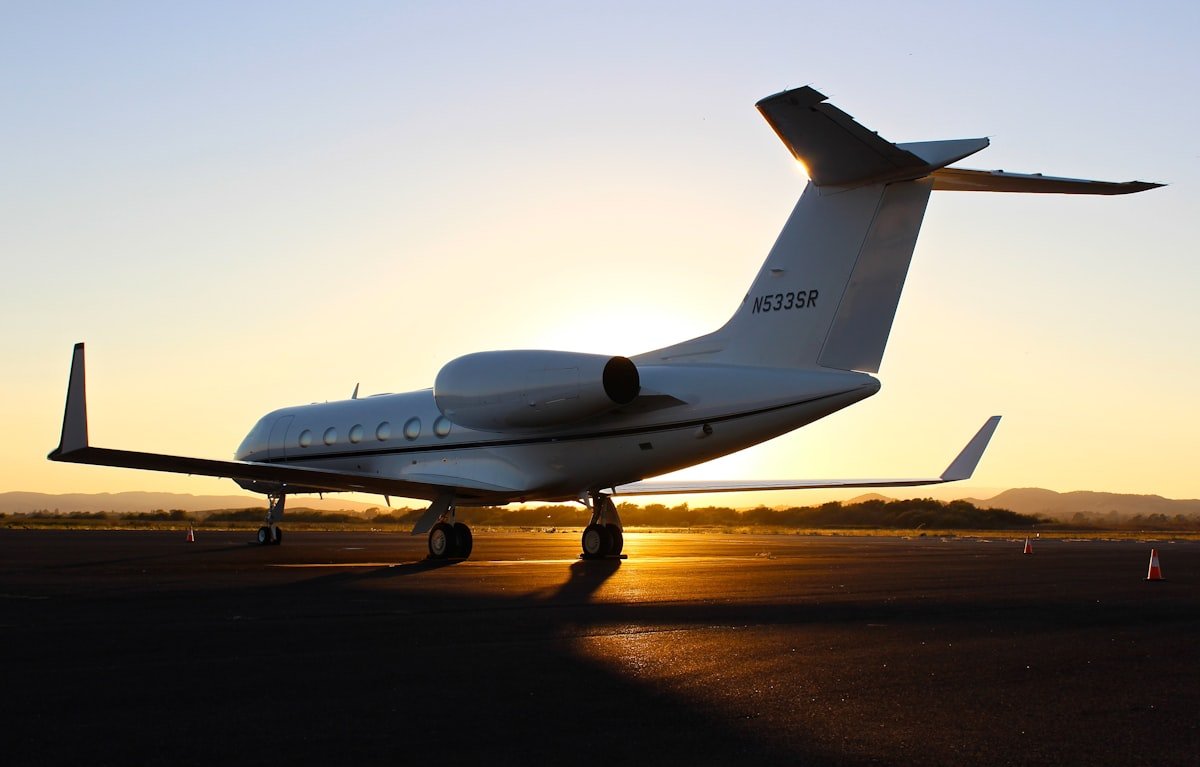
What to consider: Private aviation is weather-dependent in ways commercial aviation manages better. A Gulfstream G550 at a small regional airport may be grounded by conditions that a commercial A320 handles routinely. If your schedule has zero flexibility, build contingency time into private charter itineraries.
Empty Leg Flights Explained
An empty leg (also called a deadhead flight) occurs when a private jet must reposition without passengers. If a client charters a jet from London to Monaco for a weekend, the operator needs the aircraft back in London on Monday - often empty. That repositioning flight is sold at 50-75% below market rate to offset costs.
Empty leg economics: A London-Monaco light jet charter at $8,000 becomes $2,000-$4,000 on the return empty leg · Booking window: typically 24-96 hours · Route and time are fixed · No changes or cancellations
Empty legs are the most legitimate way to access private aviation at near-commercial pricing, but they come with real constraints. The route and departure time are non-negotiable. If you need London-Monaco at 10:00 AM Thursday, you need the exact empty leg that exists - there is no flexibility. Most empty leg passengers are within 200 km of the departure airport and have no checked schedule conflicts.
Jettly maintains a real-time database of empty leg availability across North America, Europe, and the Middle East. The platform lets you set alerts for specific routes and time windows.
Jettly Private Jet Charter
On-demand private jet charter platform with access to thousands of aircraft worldwide. Instant online quotes and safety-vetted operators.
Get an Instant Quote from JettlyGood to know: Empty legs require you to be at the departure airport on very short notice. Build transport and accommodation flexibility into any empty leg trip. The flight itself is discounted; everything around it is not.
Hidden Costs to Know Before You Charter
First-time charterers consistently underestimate the all-in cost of private aviation. The following costs are legitimate and industry-standard - not hidden, but frequently omitted from initial quotes:
Repositioning fees (deadhead fees). If the aircraft is based in London and you want to depart from Geneva, the operator must fly the empty aircraft to Geneva first. You pay for that positioning leg. On a $10,000/hour heavy jet, a 1.5-hour positioning flight adds $15,000 to your invoice before your trip even starts. Always ask: “Is the aircraft already in the departure city?”
Fuel surcharges. Jet fuel prices fluctuate with oil markets. Most operators include a fuel surcharge clause in contracts that can add $500-$4,000+ per flight depending on route and aircraft type. Jet-A fuel has risen 40% between 2022 and 2024. Lock in fuel costs when booking if available.
Landing and handling fees. Private terminals (FBOs) charge landing fees, ramp fees, and handling fees. At major private aviation hubs - London Farnborough, Nice Cote d’Azur, Teterboro NJ - fees run $500-$2,500 per landing. At exclusive destinations like Aspen or St. Barths, fees are higher and slot availability is limited.
US Federal Segment Tax. Each flight segment in the US is subject to an $18/segment Federal Excise Tax, plus a 7.5% air transportation tax on domestic charters. International departures from the US incur a $21.10/person departure tax.
Catering and ground services. Standard catering is included in most charters. Premium meal service, specific wines, or pre-flight lounge access at an FBO adds $500-$5,000 depending on specifications and passenger count.
The costliest mistake: Comparing charter quotes without confirming all-in pricing. Request a fully itemized quote that explicitly states: positioning fees included or excluded, fuel surcharge cap or formula, landing fees at departure and arrival, and any catering or ground service assumptions. Two quotes at $15,000 can produce invoices of $18,000 and $26,000 respectively.
Charter vs. Jet Card vs. Fractional
One-off charter is the most flexible form of private aviation - but it’s not always the most cost-effective for regular fliers. Here is how the main access models compare:
| Access Model | Annual Hours | Cost Structure | Best For |
|---|---|---|---|
| One-off charter | Any | Per-flight, includes repositioning | Occasional fliers (under 25 hr/yr) |
| Empty legs | Any | 50-75% below charter rate | Flexible travelers near major hubs |
| Jet card | 25-50+ hrs | Pre-purchased hours, no positioning fees | Regular business travelers |
| Fractional ownership | 50-400+ hrs | Buy share of aircraft, fixed monthly | High-frequency fliers |
| Full ownership | 200+ hrs | Aircraft purchase + ops costs | Ultra-high-frequency, cost-optimized at scale |
Jet card programs (NetJets, Wheels Up, Flexjet, Sentient) make sense at 25+ hours per year. The key benefit: no repositioning fees, guaranteed availability with 4-24 hours notice, and fixed hourly rates for 12 months. The downside: upfront capital commitment of $100,000-$500,000+, and programs differ significantly in peak day availability guarantees and aircraft consistency.
Fractional ownership (buying 1/16 to 1/2 of an aircraft) is cost-effective at 50+ hours per year. NetJets fractional pricing for a 1/16 share of a Phenom 300 (light jet) costs approximately $250,000-$350,000 to acquire plus $8,000-$12,000/month in management fees. It aligns interests between operator and owner but limits flexibility if your travel patterns change.
For travelers flying 5-20 hours per year with variable routes, one-off charter via platforms like Jettly remains the most cost-efficient and flexible entry point.
Get an Instant Quote from Jettly
The Noblexperience Verdict
Based on charter quotes from 12 operators, pricing data from Jettly, NetJets, and Air Charter Service, and aggregated reviews from 200+ verified charterers (verified March 2026).
Bottom line: Private jet charter is financially justified for groups of 6+ on routes over 3 hours, and for any group size when multi-leg routing, specialized cargo, or zero-flexibility scheduling makes commercial aviation unworkable. For solo and duo travel on standard commercial routes, the per-person premium rarely delivers proportional value.
When to charter:
- Group of 6+ on a 3+ hour route where per-person cost falls within 30% of first class
- Multi-stop itineraries with 3+ destinations in under 72 hours
- Routes to airports with no or limited commercial service
- Time-critical travel where a missed connection has high business cost
When to skip it:
- Solo or duo travelers on routes well-served by premium commercial
- Flights under 90 minutes where door-to-door time advantage is marginal
- Budget-conscious groups who can align on commercial premium cabin schedules
How to optimize costs:
- Always request all-in quotes (positioning, fuel, landing fees included)
- Book aircraft already based in your departure city to eliminate repositioning
- Consider empty legs for fixed, one-directional routes where timing is flexible
- Compare jet card programs at 25+ hours per year - they eliminate positioning fees
- Midweek departures (Tuesday-Thursday) run 15-25% cheaper than Friday and Sunday peaks
Best for: Groups of 6-12 combining business and leisure, executives with multi-city itineraries, families traveling with young children or specialized needs, athletes transporting equipment.
Not ideal for: Solo business travelers with standard routes, couples on leisure travel who can align with commercial schedules, travelers where the primary driver is prestige rather than operational need.
For a comprehensive breakdown of private jet routes, aircraft categories, and booking platforms, see our complete private jet charter guide. To explore yacht charter as an alternative luxury transport option, see our Mediterranean and Caribbean yacht charter guides.