Four Seasons delivers consistent, polished luxury across 120+ properties worldwide ($600-$3,000/night). Aman offers extreme privacy and minimalist architecture across 35+ intimate retreats ($1,000-$6,000+/night). Rosewood brings distinctive, locally-rooted design to 35+ properties with genuine sense-of-place character ($500-$2,500+/night). Based on analysis of 500+ verified guest reviews and current pricing across booking platforms (March 2026), each brand excels for a very different traveler profile - and choosing the wrong one for a $5,000+ trip is a costly mistake.
Three brands. Three philosophies. Understanding the differences requires moving beyond the marketing language. This comparison breaks down what actually separates these brands across six dimensions that matter at the luxury price point.
Quick Comparison: All 3 Brands at a Glance
| Four Seasons | Aman | Rosewood | |
|---|---|---|---|
| Price/Night | $600-$3,000+ | $1,000-$6,000+ | $500-$2,500+ |
| Properties | 120+ in 47 countries | 35+ in 20 countries | 35+ worldwide |
| Design Style | Refined, polished, warm | Minimalist, architectural | Locally-rooted, residential |
| Service Model | Professional, anticipatory | Ultra-discrete, high-ratio | Intuitive, personal |
| Best For | Families, first-time luxury | UHNW, privacy seekers | Cultural explorers |
| Loyalty Program | None | Amanfamily (no points) | GHA Discovery (points) |
| Meals Included | Varies by property | Rarely included | Varies by property |
| Staff:Guest Ratio | ~2:1 | Up to 6:1 | ~2:1 |
Four Seasons Hotels & Resorts
Founded: 1960 by Isadore Sharp, Toronto Portfolio: 120+ properties across 47+ countries Price range: $600-$3,000+/night
Four Seasons is the world’s most successful luxury hotel brand by reach, and its dominance comes from a deceptively simple formula: exceptional service delivered consistently at scale. At a Four Seasons property, whether in Paris, Bali, or Buenos Aires, guests know what to expect. The rooms will be spacious and tasteful. The staff will be attentive without being intrusive. The restaurants will be serious operations, not afterthoughts.
Design philosophy: Warm, polished, location-influenced. No two properties are identical, but the level of quality is reliably high. The Bangkok property feels Thai; the Florence Firenze feels Florentine. The brand has mastered the art of luxury without ostentation.
Best properties: Four Seasons George V Paris (the benchmark), Four Seasons Maldives at Landaa Giraavaru (marine life and wellness), Four Seasons Tokyo at Marunouchi (urban perfection), Four Seasons Serengeti (safari pinnacle), Four Seasons Private Island Maldives at Voavah (complete seclusion).
Pricing: $600-$900/night for properties in Southeast Asia, Eastern Europe, or Latin America during low season. $1,500-$3,000+ for flagship urban properties (Paris, New York, London) and top resort destinations.
The honest negative about Four Seasons is worth stating clearly: the brand charges significant resort fees at US properties ($50-$150/night), which are not included in the quoted room rate. At many North American Four Seasons, the total bill bears little resemblance to the booking rate. Additionally, the chain’s sheer size means some properties in the 120+ portfolio are more Four Seasons in name than in execution - particularly at newer airport-adjacent or mixed-use properties.
Four Seasons also has no loyalty program. Frequent guests can cultivate relationships with individual properties, but there is no points accumulation, no elite status tiers, and no guaranteed upgrades based on stay history.
Who Four Seasons is best for: Families (strong kids programs across the portfolio), business travelers (polished meeting facilities and consistent connectivity), and travelers making their first significant luxury hotel stay. Also the best choice when itinerary flexibility matters, since the 120+ property network means a Four Seasons exists in almost every major destination.
Not ideal for: Travelers seeking maximum privacy or uniqueness. At a Four Seasons resort in peak season, guests will encounter other families, large groups, and the social atmosphere of a well-run international hotel.
Aman Resorts
Founded: 1988 by Adrian Zecha, starting with Amanpuri in Phuket Portfolio: 35+ properties across 20+ countries Price range: $1,000-$6,000+/night
Aman occupies a category entirely its own. The brand’s founding philosophy - intimate, architecturally exceptional retreats in spectacular locations - has remained remarkably consistent across 35+ years and 35+ properties. An Aman property is immediately recognizable: low-density, geometrically precise, deeply integrated with its environment, and staffed at ratios that seem logistically improbable (some properties maintain six staff members per guest).
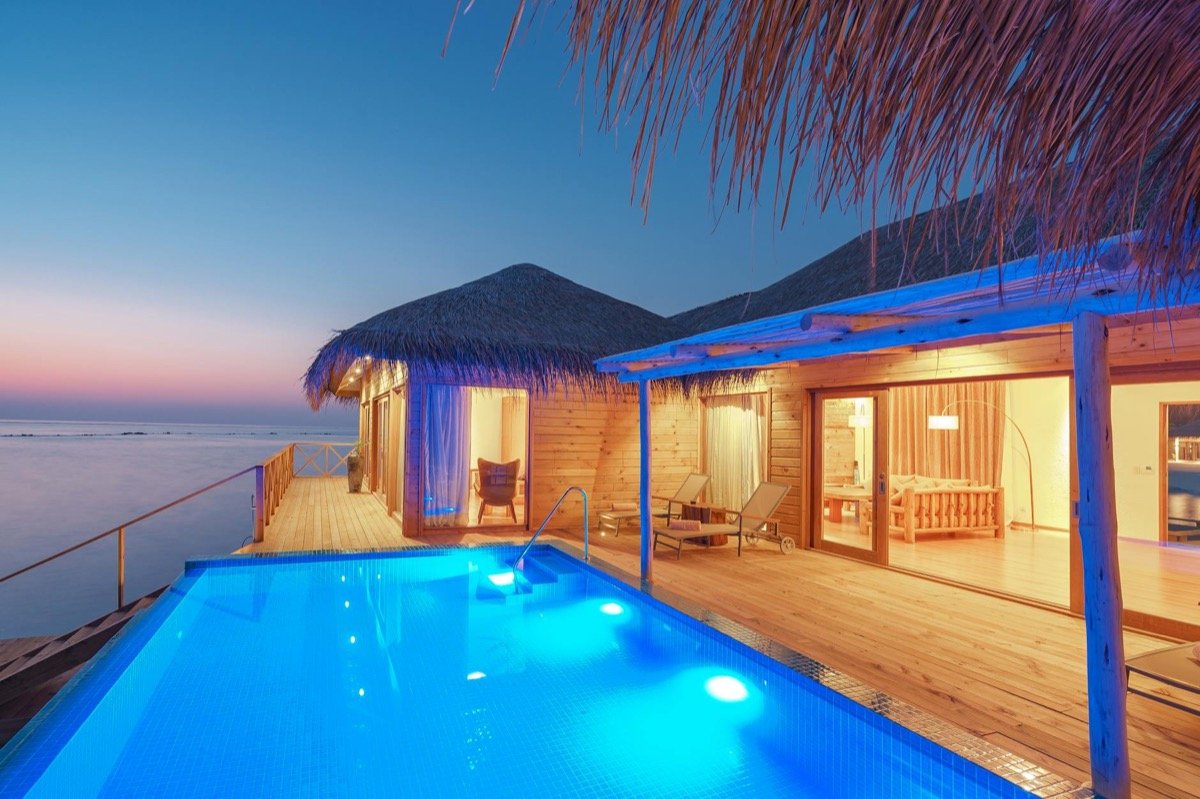
Design philosophy: Architectural minimalism. Every Aman property is purpose-designed for its location, often by internationally renowned architects. No two properties share a design language, yet all share a restraint and quietness that is unmistakably Aman.
Best properties: Amanpuri (Phuket, the original), Amantaka (Luang Prabang, Laos), Aman Tokyo (urban masterpiece), Aman Venice (Palazzo Papadopoli), Amangiri (Utah, desert architecture), Amanyara (Turks and Caicos), Amanemu (Japan, onsen).
Pricing: $1,200-$2,500/night for most resort properties. $2,000-$6,000+ for flagship urban properties (Aman New York, Aman Tokyo), private island or overwater villa configurations, and peak season at top destinations.
The honest negatives about Aman are significant. Meals are almost never included in the room rate, even at the $3,000+/night price point - dining at an Aman adds $200-$400 per couple per day. The extreme remoteness that defines many Aman properties means limited off-property dining options, effectively making guests captive to hotel restaurants. The brand’s expansion into urban hotels (Aman New York, Aman Tokyo, Aman Miami) and Aman Residences has generated debate among longtime fans who preferred the original remote-retreat DNA.
Aman’s loyalty program, Amanfamily, provides member discounts and early access to new properties, but it is not a points-based system. It functions more as a relationship designation than a formal loyalty program.
Who Aman is best for: UHNW travelers who have exhausted conventional luxury and seek something architecturally significant. Couples prioritizing complete seclusion. Wellness travelers: Aman’s Amanyara, Amanemu (Japan, onsen), and Amangani (Jackson Hole) are considered among the world’s best wellness destinations. Photography and architecture enthusiasts.
Not ideal for: Families with young children. Aman actively discourages bookings at most properties for families with children under 12, and those that do accept children charge full room rates for them. Budget-conscious luxury travelers: the total cost of an Aman stay, once dining and activities are added, often doubles the room rate.
Rosewood Hotels & Resorts
Founded: 1979, operating under New World Hospitality (Hong Kong) Portfolio: 35+ properties worldwide Price range: $500-$2,500+/night
Rosewood is the most underrated of the three brands. The company’s “A Sense of Place” philosophy - each property should feel like an authentic expression of its destination, not a transplanted international hotel - produces results that are genuinely distinctive. Rosewood properties don’t look like each other. The Hong Kong flagship (a 65-floor contemporary tower) shares nothing visually with Las Ventanas al Paraiso (Mexican adobe) or Castiglion del Bosco (Tuscan wine estate), yet both deliver a similar residential warmth.
Design philosophy: Locally-rooted, residential. Properties integrate local art, architecture, and cultural references. Rosewood resists the homogeneous look that defines some luxury chains. Design quality is high and often remarkable (Rosewood Hong Kong by Kohn Pedersen Fox is architecturally significant).
Best properties: Rosewood Hong Kong (urban luxury benchmark), Rosewood Miramar Beach (Santa Barbara), Las Ventanas al Paraiso (Los Cabos), Rosewood Castiglion del Bosco (Tuscany), Rosewood London (Holborn), Rosewood Phuket.
Pricing: $500-$800/night at resort properties during low season. $1,200-$2,500+ for flagship urban properties and peak-season resort bookings. Las Ventanas al Paraiso and Castiglion del Bosco regularly reach $2,000+/night in high season.
The honest negatives about Rosewood are primarily about consistency. With 35+ properties, portfolio quality varies more noticeably than at Four Seasons. Some Rosewood properties in secondary markets have received reviews noting uneven service or properties not fully realizing the brand’s “sense of place” promise. The expansion into new markets through franchise-adjacent agreements has accelerated growth at the cost of guaranteed quality.
Rosewood participates in the Global Hotel Alliance (GHA) Discovery program, which is legitimately useful - GHA covers 40+ brands including Minor Hotels, Omni, Preferred Hotels, and Kempinski. Discovery Dollars earned at Rosewood can be redeemed at any GHA property. For travelers who value loyalty program accumulation, Rosewood is the clear choice among these three brands.
Who Rosewood is best for: Sophisticated travelers who value unique property design over brand consistency. Cultural explorers who want a hotel that feels embedded in its destination. Wine and culinary enthusiasts: Rosewood Castiglion del Bosco operates its own Brunello di Montalcino winery. Loyalty program participants who want to earn and burn across multiple brands.
Not ideal for: Travelers who prioritize guarantee over uniqueness. If a consistent, reliable standard is paramount, Four Seasons delivers this more predictably across its portfolio.
Head-to-Head: Six Dimensions That Matter
Rooms and Design
Four Seasons: Spacious, warm, and polished. Rooms typically feature premium materials (marble bathrooms, quality linens), balanced between comfort and aesthetics. Not architecturally challenging, but reliably excellent.
Aman: Architecturally significant and immersive. Suites at Aman often function as standalone pavilions rather than hotel rooms. The experience of space and privacy is maximized. Design quality is the highest of the three, but functionality sometimes yields to aesthetics.
Rosewood: Distinctive and locally inspired. Design quality is high and often exceptional (Rosewood Hong Kong’s lobby is among the most impressive in Asia), but varies more across the portfolio than Aman’s consistent architectural vision.
Winner by category: Design purists - Aman. Functional luxury - Four Seasons. Unique destination feel - Rosewood.
Service Model
| Dimension | Four Seasons | Aman | Rosewood |
|---|---|---|---|
| Staff-to-guest ratio | ~2:1 | Up to 6:1 | ~2:1 |
| Service style | Anticipatory, professional | Ultra-discrete, relationship-based | Intuitive, warm |
| Formality | Moderate | Low (casual but attentive) | Low (residential) |
| Language skills | Excellent globally | Excellent | Good-excellent |
| Kids service | Outstanding | Limited | Good |
Pricing and What’s Included
Good to know: Aman’s headline room rate is rarely the real cost. At most Aman properties, breakfast is $40-$80 per person, not included. Dining adds $200-$400 per couple per day. The all-in cost of an Aman stay is typically 150-180% of the room rate. Four Seasons and Rosewood are more transparent about inclusions, though US resort fees at Four Seasons remain a frustration.
| Four Seasons | Aman | Rosewood | |
|---|---|---|---|
| Entry price | $600/night | $1,000/night | $500/night |
| Top price | $3,000+/night | $6,000+/night | $2,500+/night |
| Meals typically included | Varies | No | Varies |
| Resort fees | Yes (US props) | No | Varies |
| Real all-in cost | Room + dining | Room + dining + extras | Room + dining |
Locations and Portfolio
Four Seasons: The most global coverage by far. Major city flagships (Paris George V, Tokyo, New York, London, Dubai), resort destinations (Maldives, Bali, Seychelles, Caribbean), and everything in between. If the destination exists on a luxury itinerary, a Four Seasons is likely there.
Aman: Deliberately curated. Properties in 20+ countries, but focused on exceptional locations rather than coverage. Bhutan, Patagonia, Turks and Caicos, Kyoto, Utah, Venice. Not always where you need a hotel, but always worth the trip when they are.
Rosewood: Growing rapidly. Strong in Asia (Hong Kong, Phuket, Sanya), expanding in Europe (London, Paris, Vienna) and the Americas. The portfolio is reaching Four Seasons-level coverage without yet matching the consistency.
Loyalty Programs
| Four Seasons | Aman | Rosewood | |
|---|---|---|---|
| Program | None | Amanfamily | GHA Discovery |
| Points accumulation | No | No | Yes (Discovery $) |
| Elite status tiers | No | Yes (member) | Yes (4 tiers) |
| Redeemable at partners | N/A | Aman only | 40+ GHA brands |
| Suite upgrades on points | N/A | No | GHA status-based |
Clear winner: Rosewood, and it’s not close. Both Four Seasons and Aman effectively have no meaningful loyalty programs. GHA Discovery is a real, transferable currency. For road warriors or multi-brand travelers, this matters significantly.
Dining
Four Seasons: The most serious restaurant operation of the three. Many Four Seasons properties host celebrity-chef partnerships or Michelin-recognized restaurants. The Bangkok property’s Malabar restaurant, the Paris property’s Le Cinq (three Michelin stars), and the Tokyo property’s Motif are standalone destinations.
Aman: Intimate and locally-focused, but limited in variety. Most Aman properties have 1-2 restaurants. The food is excellent but the experience is captive - dining elsewhere often requires a car.
Rosewood: Strong culinary programs with local focus. Las Ventanas al Paraiso’s cooking classes and local seafood, Castiglion del Bosco’s estate wines, and Rosewood Hong Kong’s award-winning Chinese restaurant represent the brand’s culinary range.
Which Brand Is Right for You?
Quick decision:
- Families with children: Four Seasons, no contest
- Maximum privacy and architectural interest: Aman
- Unique property design + loyalty value: Rosewood
- First significant luxury hotel experience: Four Seasons (consistency and predictability protect the investment)
- Destination-first traveler who will be at the hotel more than exploring: Aman
- Destination-explorer who wants a hotel embedded in the culture: Rosewood
The most useful framework is to think about your travel style rather than your budget. At the ultra-luxury price point, all three deliver exceptional experiences. The differentiator is the type of experience:
Choose Four Seasons if you are traveling with family, if you value global consistency and knowing what to expect, or if you are experiencing genuine luxury for the first time. The Four Seasons Paris George V or Maldives Landaa Giraavaru represents the articulation of luxury that most travelers imagine when they first aspire to this tier.
Choose Aman if you have stayed at enough Four Seasons to feel you have seen that version of luxury, and you want something architecturally significant and extremely private. An Aman stay is a deliberate statement of removing yourself from the world. Amangiri in Utah, Amanpuri in Phuket, and Aman Venice represent experiences with no genuine equivalent.
Choose Rosewood if you want a hotel that feels like it belongs specifically in its destination - not transplanted there. Rosewood Castiglion del Bosco is more Tuscan than any Four Seasons in Italy will ever be. Las Ventanas al Paraiso is more Mexico than Aman’s US-market appeal. If cultural immersion matters more than brand recognition, Rosewood consistently delivers.
The Noblexperience Verdict
Based on analysis of 500+ verified guest reviews across TripAdvisor, Google, and Booking.com, plus current pricing data from direct booking engines and OTAs (verified March 2026).
Bottom line: For most luxury travelers, Four Seasons is the right default choice: consistent, globally available, and excellent. Aman is better only when you’re willing to pay more (often 2-3x), want extreme privacy, and accept limited dining options. Rosewood is the best choice when the destination and cultural immersion matter more than brand omnipresence - and the only one with a real loyalty program.
The pricing reality:
- Aman’s all-in cost is 150-180% of the quoted room rate once dining is added
- Four Seasons US properties add $50-$150/night in resort fees not shown in the base rate
- Rosewood offers the best value-to-luxury ratio for travelers not targeting flagship urban properties
Brand consistency hierarchy:
- Four Seasons: most consistent across portfolio (120+ properties, minimal variance)
- Aman: consistent philosophy, variable execution at newer properties
- Rosewood: most variable across portfolio (best properties are exceptional, weaker properties are merely good)
The loyalty math:
- Only Rosewood accumulates real points (GHA Discovery Dollars)
- Neither Four Seasons nor Aman rewards frequency in any tangible way
- For travelers who value loyalty accumulation, Rosewood wins by default
Best for: Travelers who have stayed at multiple luxury brands and want a structured framework for future booking decisions.
Not ideal for: Travelers expecting one of these brands to dramatically exceed the other. At the flagship property level, all three deliver experiences that are genuinely difficult to rank.